In just 13 short days, I'll be getting on a plane. That plane will taxi down the runway and lift off. Hopefully, I'll have a window seat, so I can look down and marvel at this beautiful country one last time. And I'll recount the memories of the last 3 years, so many good memories.
Part of my preparation for that day was taking my last 3 rolls of film to Wolpo (World Photography), the photo processing lab I've used exclusively since I started shooting film. Although I dropped off these last rolls a couple weeks ago, I only found time to stop by and pick them up the other day, and even then, I didn't have any spare time for a teary-eyed goodbye with the shop owners, who, even though we don't speak the same language, I have gotten to know on at least a friendly level.
I had a bit of anxiety during the days and weeks I waited to finally get a look at these rolls of film for a couple reasons. The first reason having to do with my Leica M3 and my relative dissatisfaction with the results of all previous rolls. All of my previous shots with my Leica M3 came out really grainy and/or noisy. Granted, I hadn't shot with too many different types of film, in fact, I have loaded my M3 with black and white Ilford HP 400 film almost exclusively. So, for my final roll, I wanted to see how something like Portra 400 would look and if it would still result in grainy or noisy photos. I was pleased to see, that it did not. I think the grain and noise can be attributed to the scans themselves. I will have to get a few of those black and whites printed and see if they are just as grainy. In any event, the images from my final roll of film with my beautiful M3 turned out quite nice.
Onto the second roll which was shot with my trusty Leica M6. I've never had any issues with scans from my M6, nothing but good stuff. For a few seconds, the other day, I suffered from a case of temporary insanity and thought briefly about selling my Leica M3, but I regained my senses and snuffed out that thought. However, the fact still remains, that I get better images, more consistently, with my Leica M6, which makes owning the M3 a mere luxury.
So what about the third roll of film? Unfortunately, while my photo lab was able to process my third roll of film, they did not have the ability to scan it for me. The third roll of film was 35mm film, loaded into my Mamiya 7, medium format camera, via a 35mm panoramic adapter, resulting in an ultra wide 24mm x 65mm negative image. From what I see in the negatives, the images look good, however, you will have to revisit my blog to see the results, since I won't be able to get them scanned until sometime after I get settled in El Paso.
With that let's get on to the photos from my Leica M3 and M6, my final film images from Korea (not including the panoramic images I just mentioned). Both sets shot with the Zeiss Planar 50mm f/2 lens.
The photos below were shot over a two day stretch, about a week apart, in various parts of Seoul.






Part of my preparation for that day was taking my last 3 rolls of film to Wolpo (World Photography), the photo processing lab I've used exclusively since I started shooting film. Although I dropped off these last rolls a couple weeks ago, I only found time to stop by and pick them up the other day, and even then, I didn't have any spare time for a teary-eyed goodbye with the shop owners, who, even though we don't speak the same language, I have gotten to know on at least a friendly level.
I had a bit of anxiety during the days and weeks I waited to finally get a look at these rolls of film for a couple reasons. The first reason having to do with my Leica M3 and my relative dissatisfaction with the results of all previous rolls. All of my previous shots with my Leica M3 came out really grainy and/or noisy. Granted, I hadn't shot with too many different types of film, in fact, I have loaded my M3 with black and white Ilford HP 400 film almost exclusively. So, for my final roll, I wanted to see how something like Portra 400 would look and if it would still result in grainy or noisy photos. I was pleased to see, that it did not. I think the grain and noise can be attributed to the scans themselves. I will have to get a few of those black and whites printed and see if they are just as grainy. In any event, the images from my final roll of film with my beautiful M3 turned out quite nice.
Onto the second roll which was shot with my trusty Leica M6. I've never had any issues with scans from my M6, nothing but good stuff. For a few seconds, the other day, I suffered from a case of temporary insanity and thought briefly about selling my Leica M3, but I regained my senses and snuffed out that thought. However, the fact still remains, that I get better images, more consistently, with my Leica M6, which makes owning the M3 a mere luxury.
So what about the third roll of film? Unfortunately, while my photo lab was able to process my third roll of film, they did not have the ability to scan it for me. The third roll of film was 35mm film, loaded into my Mamiya 7, medium format camera, via a 35mm panoramic adapter, resulting in an ultra wide 24mm x 65mm negative image. From what I see in the negatives, the images look good, however, you will have to revisit my blog to see the results, since I won't be able to get them scanned until sometime after I get settled in El Paso.
With that let's get on to the photos from my Leica M3 and M6, my final film images from Korea (not including the panoramic images I just mentioned). Both sets shot with the Zeiss Planar 50mm f/2 lens.
The photos below were shot over a two day stretch, about a week apart, in various parts of Seoul.
Leica M3

Seoul Subway

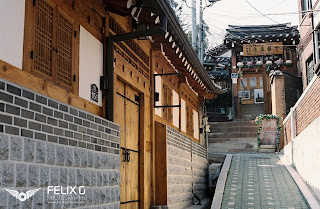
Bukchon Hanok Village


Changdeokgung Palace, Seoul


Near Anguk Station

Anguk Station

Leica M6

Nowon-gu, South Korea


Guitar Cafe, Chungmuro

Where's Waldo? Cheonggyecheon Stream


