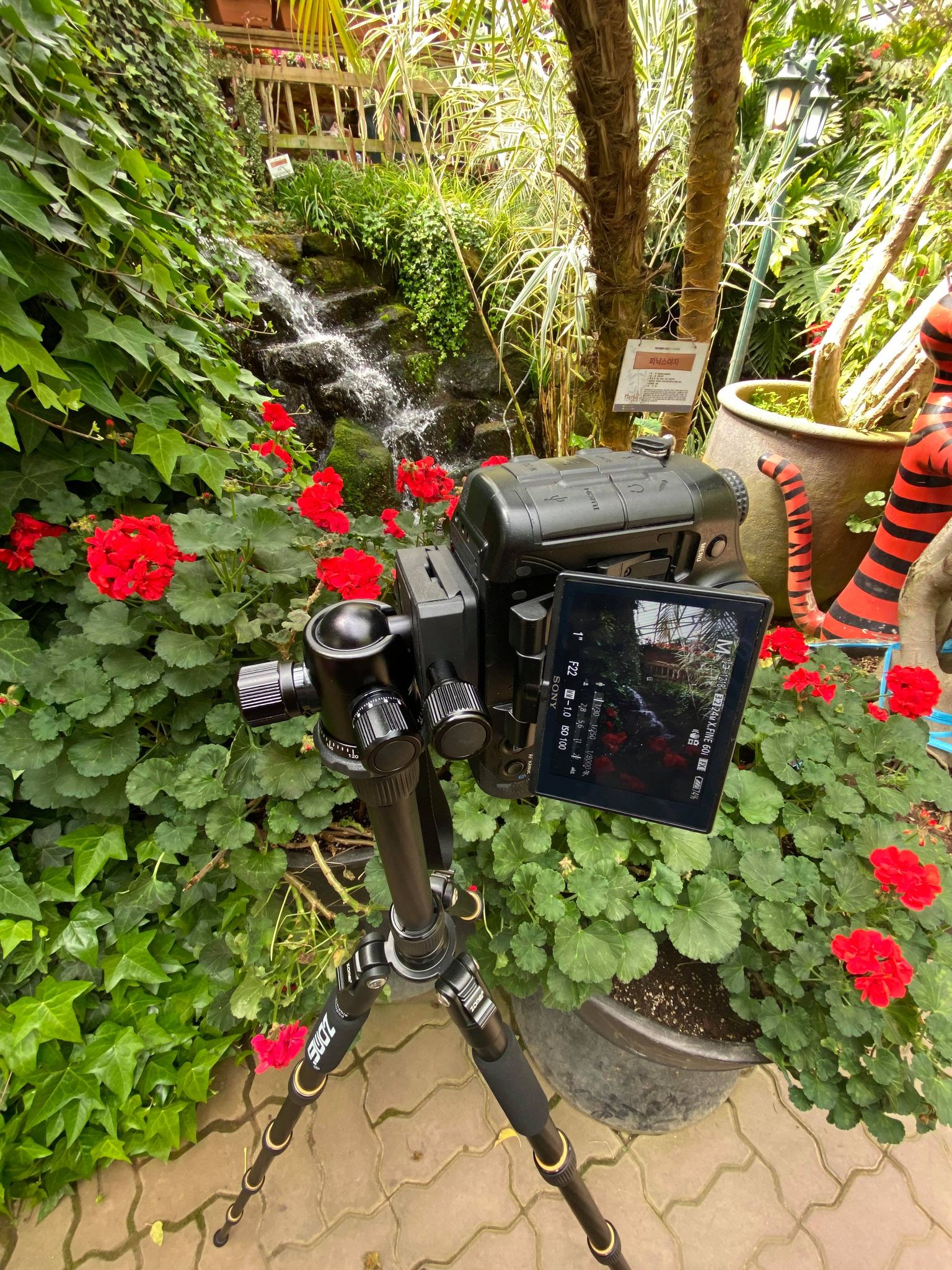
I used to say that fall was my favorite season of the year, but being back in Korea in time for the start of spring, reminds me of just how special spring really is. Rain had been forecast for the entire weekend and I had resigned myself and my cameras to the fact that I would be stuck indoors on both of my days off, but the weather gods shined their light on South Korea and the skies cleared for what turned out to be an amazing and fun day of photography all day Sunday.
I packed my camera bag with my Sony A99 and several lenses of varying focal lengths from 28mm (wide angle) all the way out to 135mm (telephoto), however, it was the 28mm wide angle lens that stayed on my camera for the vast majority of the day. Only a scant few of the images below were shot at a focal length other than 28mm and I will annotate those.

The Minolta AF 28mm f/2.8 lens is a vintage lens (originally released in 1985) and like many of the Minolta A Mount vintage lenses, can be had for very little money. As of the writing of this blog post, there's one available on Amazon for $59.95 USD!

Our first stop was Herb Island, a botanical garden and park located near the city of Pocheon, South Korea. It labels itself as an amusement park but that is just a bit of a stretch. When I think of amusement parks, I think of rides, rollercoasters and other typical attractions that you might find at a typical amusement park. That's not to say that Herb Island isn't worth the price of admission (about $7.50 USD), but it's just not what I would consider an amusement park. It's more of a garden than anything else. I should mention, the restaurant is quite good and I am fairly certain that all the spices and herbs used to season and garnish the plates are grown on the property.
All that being said, the photographic opportunities were infinite! In fact, I think that it would be safe to say, that Herb Island is in fact, a place where people go spend the day SPECIFICALLY to take photos of themselves, family and friends. There were a lot of "photo spots' set up around the grounds but aside from that, as a photographer, there were an endless amount of plants, flowers, water features and other cool stuff to capture.
We started in the botanical garden...


There were even plenty of colorful displays to take photos of in the gift shop.
We traveled by bus back towards home (Camp Casey, South Korea) and as we approached the area of Mount Soyosan, a popular and picturesque mountain hiking trail, we realized that we had plenty of day light left. I still had a little bit left in the "gas tank" even after an already long day of walking and shooting, so we decided to jump off the bus at the Soyosan train station and walk across the street to the foot of the mountain and the trail head.
I had visited Soyosan a couple of times the last time I was in Korea (2013-2016) but had never actually ascended to any of it's peaks. But Sunday turned out to be the day and it wasn't easy. The sky was clear, with a few clouds out West towards the horizon and I definitely had a sunset composition in mind. As we started getting higher and higher in elevation, I began look back over my shoulder from time to time to see if I could frame a sunset photo but I had to keep climbing higher and higher to get above the tree line. There were some potential compositions at the foot of the mountain, where the creek runs through the cherry blossom trees, which are currently in full bloom, but none of the framing I could picture would highlight what I wanted to highlight, which was, of course, the sunset.
The climb up to the top of Soyosan is NO JOKE, it will burn your achilles, calves, quads and hamstrings. I had to get up the mountain with urgency because the sun was rapidly going down. I looked up and the imposing mountain, I looked back at the sun, continuously gauging how much time I had before I would lose the sunset. I'm not going to lie, I was hoping that I would find a nice view for my sunset shot without having to go all the way to the top of the peak, not just because I was so tired, but also because I needed at least a couple minutes before sunset to get my tripod and camera set up, not to mentioned I didn't know which lens I was going to use. I kept going up.
The peak is located at an elevation of 558 meters, but time had run out, I had to find a spot to set up, thankfully, at 510 meters, there was an excellent window through the trees and foliage, so I made the decision to not risk going any further for fear of not making it in time to get my photo and I set up.

I tried a couple of focal lengths but the above image, shot with a Minolta 135mm f/2.8 lens ended up being my favorite. It just captured the awesomeness of the sunset, the brilliant orange color and the warm feel more so than the 50mm which I used below. I thought I wanted to capture some of the foliage but it just didn't work out, so I ditched the 50mm and went with the telephoto.


Above: a nice view of how it looked from my exact perspective.
Below: looking back at the trail, it seems to just disappear into oblivion.


The above photo depicts my other option for a sunset photo. While it is picturesque, I just felt compelled by some unknown force and motivation to hike up the mountain for my sunset shot.
After the sun went down, we made our way back to the trail head where there are a number of excellent restaurants to sit down (I was definitely ready to sit down) and eat. we opted for spicy Korean chicken with beer and soju, which was a nice way to end our long, but enjoyable day of photography.
Enjoy the rest of the photo gallery featuring more photos taken at Herb Island.