Tuesday, April 5, 2016

My Final (Film) Photographs from Korea

In just 13 short days, I'll be getting on a plane. That plane will taxi down the runway and lift off. Hopefully, I'll have a window seat, so I can look down and marvel at this beautiful country one last time. And I'll recount the memories of the last 3 years, so many good memories.

Part of my preparation for that day was taking my last 3 rolls of film to Wolpo (World Photography), the photo processing lab I've used exclusively since I started shooting film. Although I dropped off these last rolls a couple weeks ago, I only found time to stop by and pick them up the other day, and even then, I didn't have any spare time for a teary-eyed goodbye with the shop owners, who, even though we don't speak the same language, I have gotten to know on at least a friendly level.

I had a bit of anxiety during the days and weeks I waited to finally get a look at these rolls of film for a couple reasons. The first reason having to do with my Leica M3 and my relative dissatisfaction with the results of all previous rolls. All of my previous shots with my Leica M3 came out really grainy and/or noisy. Granted, I hadn't shot with too many different types of film, in fact, I have loaded my M3 with black and white Ilford HP 400 film almost exclusively. So, for my final roll, I wanted to see how something like Portra 400 would look and if it would still result in grainy or noisy photos. I was pleased to see, that it did not. I think the grain and noise can be attributed to the scans themselves. I will have to get a few of those black and whites printed and see if they are just as grainy. In any event, the images from my final roll of film with my beautiful M3 turned out quite nice.

Onto the second roll which was shot with my trusty Leica M6. I've never had any issues with scans from my M6, nothing but good stuff. For a few seconds, the other day, I suffered from a case of temporary insanity and thought briefly about selling my Leica M3, but I regained my senses and snuffed out that thought. However, the fact still remains, that I get better images, more consistently, with my Leica M6, which makes owning the M3 a mere luxury.

So what about the third roll of film? Unfortunately, while my photo lab was able to process my third roll of film, they did not have the ability to scan it for me. The third roll of film was 35mm film, loaded into my Mamiya 7, medium format camera, via a 35mm panoramic adapter, resulting in an ultra wide 24mm x 65mm negative image. From what I see in the negatives, the images look good, however, you will have to revisit my blog to see the results, since I won't be able to get them scanned until sometime after I get settled in El Paso.

With that let's get on to the photos from my Leica M3 and M6, my final film images from Korea (not including the panoramic images I just mentioned). Both sets shot with the Zeiss Planar 50mm f/2 lens.

The photos below were shot over a two day stretch, about a week apart, in various parts of Seoul.

Leica M3


Seoul Subway


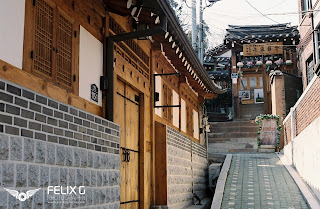
Bukchon Hanok Village


Changdeokgung Palace, Seoul


Near Anguk Station


Anguk Station


Leica M6


Nowon-gu, South Korea


Guitar Cafe, Chungmuro


Where's Waldo? Cheonggyecheon Stream


Thursday, March 24, 2016

Leica D-Lux (Typ 109) First Impressions with Sample Images


Leica D-Lux (Typ 109)

Normally, I would do my best to start out any new blog entry with some wit and humor but today I am simply too tired and worn out, the gas tank is running on empty. Which says a lot, in and of itself, about my newest camera, the Leica D-Lux (Typ 109). "Typ" is how you spell "Type" in German and this is, after all, a camera of German design. However, it's not manufactured in Germany, no. For that the Germans partnered up with their old WWII Axis partners, the Japanese. Both countries, of course, reknown for making the best cameras in the world, this Leica is no exception.

I picked the camera up for the post office late in the afternoon, alas, just an hour before my dinner plans. I only had time to charge the battery and quickly browse through the buttons and menus. I pulled the battery off the charger, threw the camera in my jacket pocket (I can verify first hand that the Leica D-Lux Typ 109 does indeed fit in a jacket pocket with no problems) and ran out the door. Because of my time constraints, I left the camera in full automatic, which was fine because I simply wanted to fire off a few test shots to get an idea of what this camera is ultimately capable of. I was not disappointed. 


This is my first shot with the Leica D-Lux (Typ 109). As you can see, it has the classic look that only a Leica lens can deliver. The max aperture on this fantastic Vario-Summiliux is 1.7! 


The above photo of the Vespa was taken at full zoom, 75mm. 
I shot this hand held from the inside of my car.


At 24mm, the lens is plenty wide. I love the cinematic, full frame look 
when the perspective is set to 16:9.


I left the camera in 16:9. I think I like it much better than 4:3. As you an see, even in low light, skin tones are warm and the photo shows very little noise. The above image is at ISO 500, f/1.7

I'm extremely excited about the addition of this camera to my inventory. It gives me another fun tool to choose from and fulfills my desire of owning a digital Leica. Who knows? Perhaps this will push me to sell my film Leica's to fund a $4000 Leica Q?

Sunday, March 20, 2016

60 Year Old Camera Works Like a Charm - Agfa Isolette I

It's always a crap shoot when it comes to buying vintage cameras online. Even if the listing claims that everything is in working order, there's about a 20% chance that something on the camera is not, in fact, working. That's been my experience at least.

When I first started collecting vintage cameras, I would take receipt of the camera, shoot a roll of film, wait for the contact sheet to come back from the lab and then assess whether or not the camera was in need of repair. Quite a few of my vintage cameras arrived with a bad shutter curtain, still others had a non-working light meter or bad rangefinder etc.

So what I finally decided to do was to just go ahead and take all my newly acquired vintage cameras to my repair guy for a good CLA (clean, lubricate and adjust) regardless of whether they needed it or not. This provided me with piece of mind.

One camera, however, that I bought a long time ago and never got around to shooting with until just a couple weeks ago, was this fabulous Agfa Isolette from the 1950's. It's a medium format, fold out camera with bellows, that shoots big 6x6 negatives. It's rudimentary in it's features and I was rather worried about whether or not it was actually in working order. One of the interesting things about the camera, and what makes it a challenge to shoot with, is that there is no way to focus the camera other than simply measuring the distance between yourself and the subject, then setting the focus ring to that distance. There's no visual means of verifying the focus. It's a leap of faith.

I did, however, add a vintage range finder that mounts to the top of the camera on the flash mount. But it's also extremely rudimentary and only serves to verify your distance from the subject, it does not in any way verify the focus. The ONLY way to know if your picture is in focus is to get the pictures developed and see for yourself.

I finally loaded a roll of 120 Fuji Across ISO 100 film into the Agfa Isolette last week and kept it in my bag until I went through the roll. I was pleasantly surprised to see that all of my pictures were not only exposed correctly but were also in focus! Some very nice results from a 60 plus year old camera!


Shutter Clicks with My New Sony A7RII

I had already packed my camera bag for a day of shooting in Seoul this past weekend. The contents of said bag included my Mamiya 7 medium format film camera (which I had loaded with a roll of 35mm color film so that I could try out my newly acquired panoramic adapter), the Leica M6, loaded with a roll of Porta 400 (widely considered the best quality 35mm film available today) and my new Sony RX1RII. But at the last moment, just before stepping out the door, I switched out the RX1RII for the Sony A7RII.

I want to get some trigger time behind both of my new Sony's but after thinking about it for a while, I felt like the A7RII would suit my needs better on this particular day, and while I could have easily brought both of them along, I only wanted to concentrate and focus on one at a time. Not to mention, I had a few frames to shoot with the film cameras as well. So, the A7RII won the day because I planned to slap on the wide angle Zeiss 16-35mm f/4, Zeiss 24-70mm f/4 (which is a highly versatile lens capturing both wide angle and standard focal length, plus a little zoom) and the highly touted Sony Zeiss FE 55mm f/1.8 prime lens.

I captured most of my shots with the Zeiss 55mm, followed by the Zeiss 24-70mm and just a scant few with the Zeiss 16-35mm.

I was pleased to see that the battery lasted all day in the A7RII. Naturally, I had thrown a few extras in the bag but I didn't even need them. Yes, the battery life is less than most DSLR's but you'll be just fine unless you're shooting a lot of video and/or 4k video. If that's the case, just bring some extra batteries and perhaps a battery grip that holds two batteries.

I brought along a couple of shooting buddies, old Pete and young Caleb. We spent some time on the subway, did a little camera shopping and enjoyed a nice walk down the Cheonggyecheon Stream in downtown Seoul. the day presented plenty of nice photo opportunities...

I hope you enjoy my latest gallery!

Please make a donation to help support my artistic and photographic endeavors.
Thanks for your consideration.


Sony A7RII with Zeiss FE 55mm


Friday, March 18, 2016

I Wanted a Digital Leica, So I Bought a Digital Leica D-Lux (Typ 109)

I love my Leica M3 and Leica M6 35mm film cameras, they are truly, legendary mechanical works of art. But secretly, I have always wanted a digital Leica.What has previously prevented me from doing so are 3 factors. 1) The Leica digital offerings that are any good are out of my price range, such as the M9 and M240. 2) I wasn't hot on the idea of a digital rangefinder and 3) The Leica digital cameras that were within my price range were not all that good and/or did not come with a EVF viewfinder.

I have been looking long and hard at the new, Leica Q. A 24mp, full-frame digital camera with a fixed 28mm lens. It looks amazing and the images I have seen are second to none. But it costs a whopping $4,200 USD. I opted for the Sony RX1RII and was able to find a used model for $2,800. I think the RX1RII is every bit the equal of the Leica Q, and I am content with my choice.

But that didn't quench my thirst for a digital Leica.

I'm surfing around eBay last night and stumble upon the Leica D-Lux (Typ 109). I had seen previous versions of the Leica D-Lux, such as the D-Lux 6, but this was the first time I had seen the latest version even though it was released in November of 2015 (normally I don't miss these things). And much to my surprise, there it is... a built in EVF on the back of the new Leica D-Lux!

Prior to this latest version, you were stuck with using only the LCD screen on the back of the camera, or purchasing an add-on EVF viewfinder which made the camera larger and took another chunk out of your pocket. In addition to the built in EVF, the D-Lux jumps from 10mp to 12mp and shoots video in 4k. Nice.

The Leica D-Lux (Typ 109) is priced at a very reasonable $850 - $1,100 depending on where you buy it. This is what got my attention. Finally, a nice Leica digital camera in my price range.

Leica works closely with Panasonic when it comes to sharing technical know-how in the production of digital cameras. In fact, they share so much that Panasonic offers their model known as the Lumix LX100 which is internally, identical to the Leica D-Lux (Typ 109). At least that's what "they" say. The Lumix is priced around $200-$300 USD less than the Leica. But what are the differences?

"They" say that internally, the two cameras are identical, in fact, the Panasonic Lumix LX100 sports the same Leica lens that is mounted on the D-Lux. But there are a few key differences which make the cost difference worth the stretch. Firstly, the Panasonic Lumix LX100 is made in China, while the Leica D-Lux (Typ 109) is made in Japan. Secondly, the Leica includes a 3 year warranty compared to the 1 year warranty with the Panasonic. Thirdly, the body design of the Leica seems to be of a better build with more metal than plastic compared to the Panasonic and lastly, the Leica D-Lux (Typ 109) comes included with a copy of Adobe Lightroom photo editing software.Which is really invaluable since Lightroom has gone to a subscription based pricing.

I have to admit, even though I was not able to afford the Leica Q that I really wanted, the Leica D-Lux (Typ 109) is a great compact camera that I know I will enjoy. The lens is a fast f/1.7 Summilux with a focal range of 24-75mm. The camera takes great photos that have that "Leica look" which simply can't be imitated due to the production techniques and properties of materials and glass that Leica uses. Their reputation is truly legendary for a reason.

Stay tuned to my blog for my photos from the Leica D-Lux (Typ 109), my order has been placed and my camera has been shipped. Should be here next week!


Leica D-Lux (Typ 109) images from Google image search.


Sample images courtesy of Jan Kopetzky from the official Leica page https://en.leica-camera.com/Photography/Compact-Cameras/Leica-D-Lux-Typ-109/Image